August 24, 2026
Automotive Parts Compatibility Databases: How Leading Providers Structure Their Data
Every accurate parts lookup — whether it's a customer searching by VIN or a counter clerk cross-referencing an OE number — is only as good as the compatibility database underneath it. The tools look similar from the outside; the databases powering them are where the real differences show up.
What a compatibility database actually stores
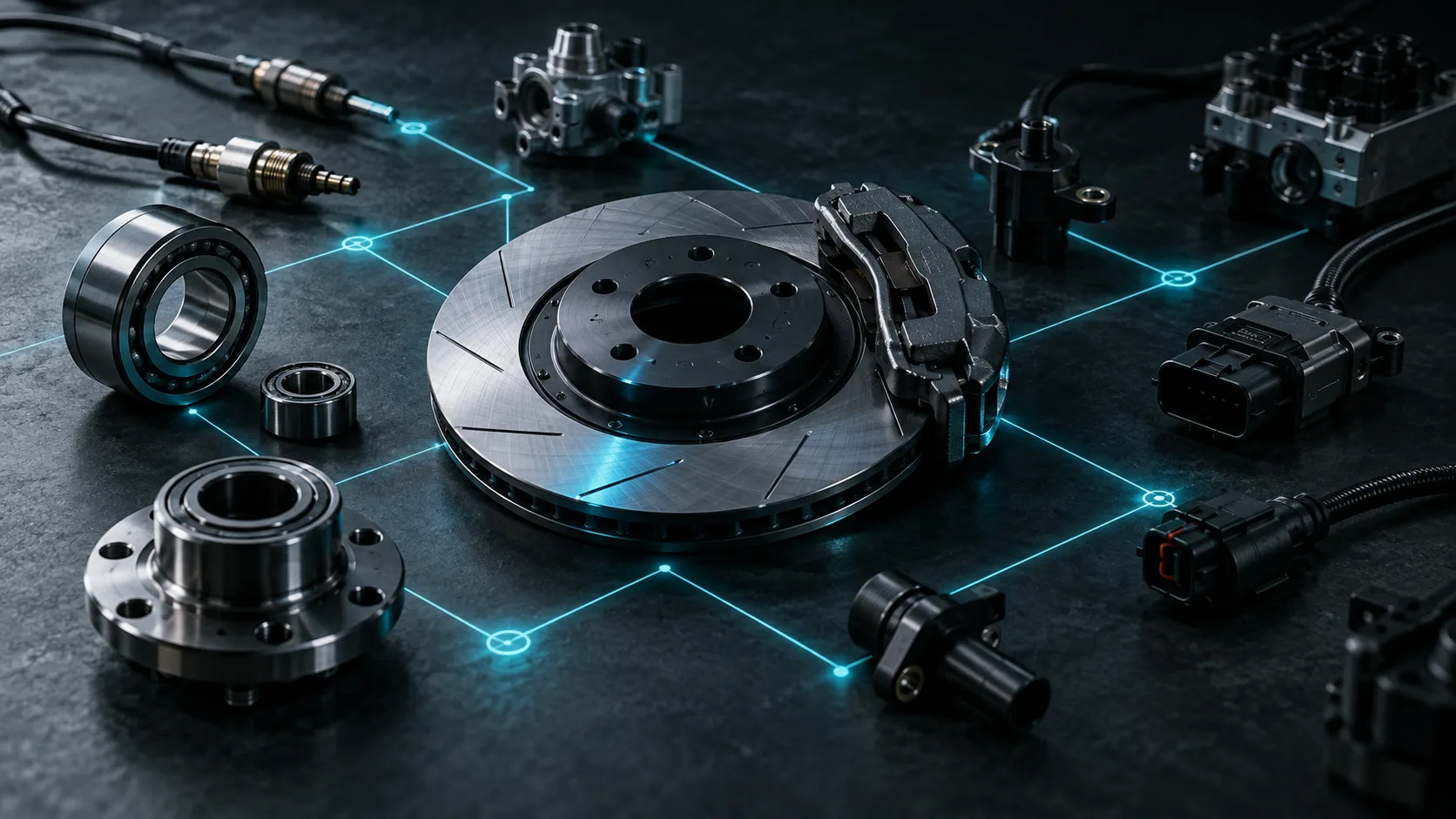
At minimum, a compatibility database maps parts to the vehicles they fit — but "fits" is doing a lot of work in that sentence. A well-built database captures fitment at the level of platform, body style, engine, and trim, not just make/model/year, because that's the level at which parts actually stop being interchangeable.
It also has to capture relationships between part numbers themselves: which aftermarket numbers replace which OE numbers, and which OE numbers have been superseded by newer ones as manufacturers revise parts across model years. A database that only stores one-directional "part fits vehicle" records misses this entirely.
How leading providers structure this data
The providers that get this right treat fitment as a normalized, structured schema — not free-text descriptions — so a lookup can be resolved programmatically instead of relying on fuzzy string matching. Vehicle attributes are linked to a consistent taxonomy (the same one a VIN decodes into), so a part's fitment record and a decoded VIN can be compared directly.
Supersession is tracked as its own chain, not folded into the base fitment table — when a manufacturer replaces part number A with part number B, both numbers need to keep resolving to the same physical part indefinitely, not just until the next catalog refresh.
The structural mistakes that break accuracy
The most common failure is a flat lookup table with no supersession tracking: it works until a manufacturer revises a number, and then every customer searching the old number gets a dead end. The second most common is fitment data with no link back to real inventory — the database can tell you a part exists somewhere, but not whether you actually stock it, which is how customers end up chasing parts that were never available to begin with.
Where this fits with AutoWiz
AutoWiz's OEM Parts API is built around resolving both directions correctly — OE-to-aftermarket and OE-to-OE across supersessions — and against your own stock specifically, so a match is never just theoretically correct, it's something you can actually sell. It's a RESTful API with full documentation, live in about 7 days.
Frequently asked questions
What's the difference between a parts catalog and a compatibility database?
A catalog lists what a supplier sells. A compatibility database maps the relationships between parts and vehicles, and between part numbers themselves, so a lookup on any one identifier can resolve to every valid equivalent.
Why does supersession tracking matter so much?
Manufacturers revise part numbers constantly. Without a maintained supersession chain, a customer searching an older OE number simply gets no result, even though a current equivalent exists.
Can compatibility data be resolved against our own inventory?
It should be. Resolving matches against your actual stock, rather than a generic third-party catalog, is what keeps results from pointing customers at parts you don't have.
See it in action
This post ties directly into AutoWiz's OEM Parts Cross-Reference API. Create an account to generate an API key, or reach out and we'll help you scope the integration.